
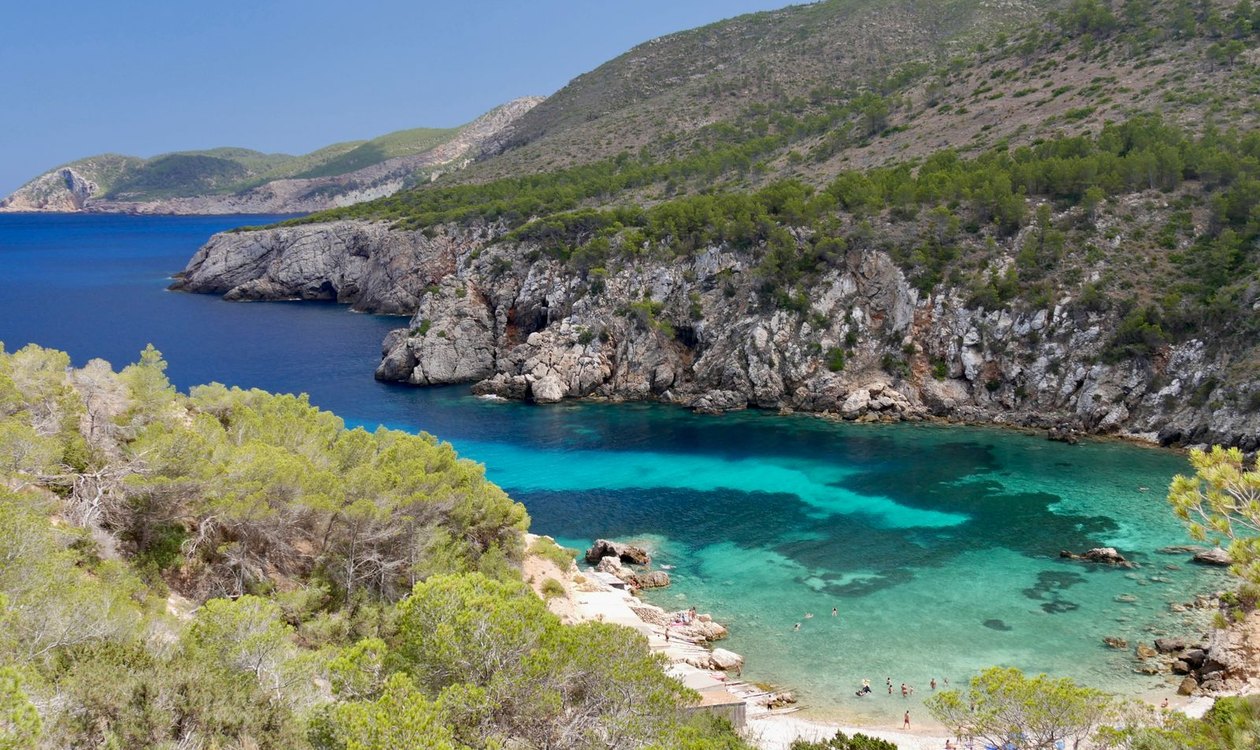
There is a stretch of about six weeks on this island — roughly from the middle of October to the end of November — when the Ibiza coves belong to almost nobody. The sunbed rental has packed up. The chiringuito has pulled its shutters down and stacked the chairs. The car park that charged you eight euros in August is an empty rectangle of gravel with a pine tree in the middle of it. And the water, which nobody seems to tell visitors about, is still somewhere around 21 or 22 degrees, because the Mediterranean takes months to let go of its summer heat.
This is the part of the year when locals actually go swimming. Not performatively, not with a cooler bag and a parasol and a reservation, but on the way home from something, towel over the shoulder, twenty minutes in the water and out. If you are on the island now, or thinking about coming before Christmas, the quiet Ibiza coves are the single best thing on offer — better than anything you can book.
Here is where to go, what to expect, and the handful of practical things that catch people out once the season flips.
The water is warmer than the air, and that changes everything
Start with the counterintuitive bit. In late October and through November, Ibiza's sea temperature typically sits a few degrees above where most northern Europeans expect "swimmable" to begin. The air cools faster than the water does, so you get these strange, wonderful mornings where it is 18 degrees on land and the sea feels like a bath you forgot to top up.
What this means in practice: swim in the middle of the day, not at dawn. Bring a proper towel and something warm for afterwards, because the five minutes after you get out are the only uncomfortable five minutes of the whole exercise. A thin neoprene top makes the difference between ten minutes and forty if you want to snorkel properly.
It also means visibility is at its annual best. Summer brings boat traffic, suncream slick and churned-up sand. Take all of that away and the water in the rocky coves goes genuinely glassy — you can see the posidonia meadows on the seabed from the surface, which is the thing that makes Ibiza's water that colour in the first place.
Five Ibiza coves that are better empty than full
Cala Xarraca, on the north coast near Portinatx, is a horseshoe of reddish rock and shallow turquoise with a small sandy shelf. In summer it is a scrum. In autumn you can swim out to the right-hand rocks and float there with nothing but the sound of water moving in the gaps. There is iron-rich mud on parts of the shoreline that people smear on themselves — genuinely a local tradition, not a spa invention.
Es Portitxol, further round the north coast, requires effort and rewards it. You park above and walk down a rocky path for about twenty minutes to a pebble bay lined with wooden fishermen's boathouses. There is no bar, no shade, no services. It is pure stone and blue, and in November you may well have it entirely to yourself. Wear real shoes for the descent — flip-flops are a mistake people make exactly once.
Cala Mastella, on the east coast below Sant Carles, is a tiny inlet with a rock platform and a famous little fish shack that keeps unpredictable hours out of season. Even if the shack is shut, the cove is worth it: calm, sheltered, deep enough to swim properly right off the rocks.
Cala Llentrisca, in the island's south-west, is the one to pick if you want to feel like you have left tourism behind entirely. A dirt track, a walk, a handful of boathouses, a pebble beach facing open sea. No facilities whatsoever. Take water.
Sa Caleta, with its dramatic ochre cliffs near the Phoenician archaeological site, is more accessible than the others and still transforms completely in low season. The cliffs glow at the end of the afternoon in a way the summer light flattens out.
Snorkelling in Ibiza's coves: rocky beats sandy, every time
If you have a mask, use it here. Sand beaches are pretty from a sunbed and dull from the water. The rocky Ibiza coves are where the life is.
Look for the edges — the boundary between sand and rock, or the line where a posidonia meadow starts. That is where the fish congregate. Expect saddled seabream, salema, wrasse, the occasional octopus tucked into a crevice with a little pile of shells outside its door like a doormat. In autumn the water clarity means you will actually see them rather than guessing at shapes.
Punta Galera, near Sant Antoni, deserves a mention of its own: a shelf of flat layered rock dropping straight into deep water, no beach at all. It looks like somebody stacked slate slabs for a hundred metres. Good for swimming out from, excellent for watching the light go.
A note worth taking seriously: posidonia is a protected seagrass and it is the reason the water here is so clear. Do not stand on it, do not pull at it, and if you are on a boat, do not anchor in it. The brown fibrous stuff washed up on beaches in autumn is not dirt — it is the plant's natural cycle, and it protects the sand from winter storms. Beaches are not cleaned in low season, and that is deliberate.
What is actually open, and what is not
This is where autumn visitors get caught. Assume beach bars are closed unless you have confirmed otherwise — a handful on the busier bays stay open through November at weekends, but most shut in October and do not reopen until April or May. Bring water, bring food, bring cash if you are banking on a shack being open.
Buses run on reduced winter timetables and some seasonal beach routes stop entirely, so a hire car is close to essential if you want to reach the north coast or the remote south-west coves. Dirt tracks to places like Cala Llentrisca are passable in a normal car but slow; after heavy rain, less so.
Check the wind before you commit to a drive. Ibiza's coves face every direction, which is the great advantage of an island this shape — when the north wind is up, the south and west coves are flat calm, and vice versa. A ten-minute look at a wind forecast will save you a wasted hour. Autumn also brings the occasional heavy, dramatic rainstorm; they tend to pass within hours.
Finally: the sun is weaker but not harmless, and the UV on a clear November day at this latitude will still catch you out on the water.
The best reason to come now
Nobody visits Ibiza in late autumn for the beaches, which is precisely why the beaches are worth visiting. You get the same water, the same rock, the same light — arguably better light, lower and softer — without the queue for the car park or the thump of a sound system two coves over.
Take a towel, a mask and a jumper for afterwards. Pick a cove facing away from the wind. Swim, get out, sit on a warm rock, and understand why the people who live here never quite leave.
Looking for what else is happening on the island while you are here? Browse our events calendar for markets, concerts, fiestas and everything else filling the Ibiza autumn.
